
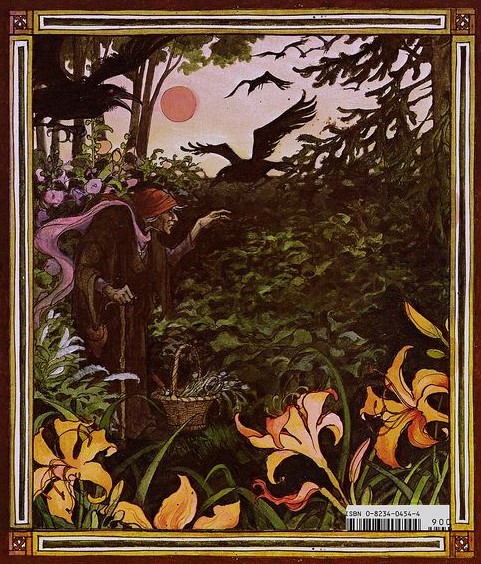
(Title quote: Clarissa Pinkola Estes/ Image: Trina Schart Hyman)
Pregnancy has really shaken me to the root. I worked myself sick for many years before graduate school, doing work deeply important to me at a soul level, trying to help other people through painful and traumatic intimate experiences. I worked myself sicker in graduate school, fighting to identify connections (if they existed– they did) between that soul work and relationships with our broader “natural” environment. And two months after finishing school, after three years of poverty and grinding stress, just when I hoped to have space to recover from years and years of pushing so hard, in preparation for a harder push to accomplish a lifelong dream of earning a doctoral degree and teaching, researching, writing, publishing… I learned I was pregnant.
Since deciding to keep this pregnancy, to birth this child, I’ve been unshakably fixated on the trauma of both. The death which comes so close with birth. I’ve had one experience which still causes me to shake uncontrollably when I talk about it. I learned that this often happens for a few hours to mothers after birth.
I am and will be the guardian of my child’s life. I will be her protector, take the energy I’ve given to the world and try to learn how to send it in many directions, both channeled to her and to community. I am so depleted but feel called to summon deeper energy than ever before in my life. This has led me to search, and I remembered Clarissa Pinkola Estes. So I started listening to her audiobook The Dangerous Old Woman on Audible. It’s really nourishing me. She writes:
The word ‘danger’ in its oldest form meant to protect… Literally, you would say ‘You stand in my danger, in the aura surrounding me that is funded by my heart, my soul and my spirit that says certain things of this earth are so precious they can never be allowed to be harmed or vanished from the face of this earth. You stand in my danger because I will protect, I will help, I will create, I will defend, I will unleash, I will hold back, I will restrain, I will open up, I will carve doors in walls— You stand in my danger.’
And this is how I’ll understand the word ‘dangerous’ old woman. She is the protectoress, she is La Conquista. She is the one who takes care of, looks after, those who have been conquered and raises them back up again. She is not only passionate, but she’s observant and experienced. But she will protect anything of goodness that has electricity in it, anything that has the merest spark… the tiniest spark at the end of the wood, she will breathe on it and bring it back to life.”-dangerous meaning, as you have experienced in your own life– rise up at midnight almost totally asleep because you hear your child, crying. You rise up in the middle of the night even to go to your grown childrens’ side because you sense they are unrestful for some reason and you just want to say, ‘are you all right?’
And this is why you will see the old women who are fixing up broken flowers and after a storm, they won’t be throwing away the brush. They won’t be tearing the trees down with their saws. They will be putting poultices around the broken limbs and trying to mend them. Because they know that a tree returns ten times its weight in goodness to us and they will preserve everything that they can that should never be allowed to perish from this earth before its time, or ever. So, in this way, I mean ‘dangerous.’
[And there are other ways to be dangerous, also, and certainly one of them is truth-telling. But there are others, as well. And that is to be unpredictable because you are being led by the soul, and the soul doesn’t always show right above ground. And so, people may decide ‘yes’ or ‘no’ or ‘not now’ or ‘maybe,’ depending on what their soul says, and they’re not predictable as to whether they will say ‘yes or no. It depends. Depends on what the soul says. It’s considered dangerous in our culture, because it’s considered unreliable. But that’s not the right word. The dangerous old woman is completely reliable because her home is in the soul. And everything that comes from her will be soulful as a result. And in that, she is utterly dependable.]
I’ve spend most of my life on the latter bracketed forms of ‘dangerousness.’ Following my instincts has led me into situations of tremendous spiritual peril. I’m not religious (except for some witchy leanings) but I think of the kind of thing that leaves you shaking for a decade after the fact as some kind of deep, soul peril. Some kind of death. This is trauma, and I’ve channeled that energy into work to try to heal myself, community, and world. I’ve worked to develop my capacity for the hardest, scariest work of accountability, willingness to hold painful truths and complexity; and I can hear the worst stories while listening for the teller’s heart, not be thrown too far by the trauma, because it’s familiar. This is a strength, a gift, I think. But I have not learned to be a protectoress in the sense of stability. In the smallest, most personal sense. I have worked hard just to learn to keep “easy” plants alive, because I never learned those skills for myself, let alone others. And I feel like this child requires me to develop that skill set. Now. It doesn’t matter, the depletion, the fear, the proximity to death. What matters is showing up for her with clarity and wholehearted commitment.
And I am afraid I can’t hold it all. I am afraid of the requirements of birth, parenting, being responsible for someone’s life when I just began to learn to savor and protect my own. I am grieving for the loss of my dear, precious life and dreams, while trying to shift myself into dreaming and desiring this new shared existence. Is it a life when your soul is not at the center? Does parenting require giving yourself up? I am afraid of the power of this child, my own power to bring her into the world, and her power over my life. I am deeply aware of my inadequacies, particularly around being able to provide for us both on my own if I need to. I have a wonderful partner and very likely won’t, but I want–need– the security of knowing that I can. I am trying to help myself channel that fear into creative energy, rather than a debilitating sorrow and melancholy.
I hear about concepts like pregnancy- and childbirth-related depression with deep skepticism. I think there’s something profoundly misogynistic about their framing. Don’t get me wrong, I also know depression well, and it’s important to be able to recognize it when it’s happening, to lift shame around it, to find ways to cope with and heal from it. I use medicine to help my own PTSD, or did before pregnancy (I had to stop because of the risk to the child, which has been its own painful awakening to symptoms I’d dulled for years). At the same time, there is nothing fundamentally “wrong” with someone who grieves during and after pregnancy. There’s nothing wrong with people who don’t want to be mothers, are ambivalent about motherhood. There’s something wrong with a culture which tries to force people into pregnancy and parenting, while stripping them of agency and support through the process.
Our (mainstream U.S.) culture is vicious towards mothers, people who choose motherhood and those who don’t but could. Our bodies, lives, and dreams are hijacked in a way not expected of fathers. We are expected to love the process unequivocally because in some way, on some level, I think our culture feels we should be punished for our sexuality. We should “face the consequences” of having sex. Fathers are not expected to “face the consequences” and shoulder responsibility in the same way. Never mind that people have likely used abortifacients for as long they’ve been able to get pregnant, and for at least the last few thousand years. There is nothing natural or healthy about forcing people into motherhood, but this sick culture does.
And so I think it’s a pretty normal reaction for those of us with developed senses of self, developed love for our individual lives, for our communities, for something special of our own, to grieve the particular loss of solitude which inevitably accompanies pregnancy and birth and parenting. It’s healthy for us to care about the loss of our autonomy. It’s reasonable for us to worry about what we’ll be expected to shoulder alone. For us to fear making mistakes, when mothers are held so much more deeply accountable than fathers and larger communities for their children’s lifelong choices and outcomes. I think (as Donald Worster, Sylvia Federici, and Roxanne Dunbar-Ortiz show in The Dust Bowl, Caliban and the Witch, and An Indigenous Peoples’ History of the United States, respectively) that this is the product of colonialism, of patriarchy, of systems which strip individuals from land-based community and history, where an isolated nuclear family replaces intergenerational networks of support and resources fundamental to secure survival.
It’s natural for mothers to fear these isolated structures, because they are not safe for us. Domestic violence and child abuse, as I learned in my work before grad school, are common. In fact, one of the most dangerous times for a woman in an abusive relationship is when she is pregnant. That’s often when DV starts. And of course, there are many people who abuse in ways that are not illegal or easy to recognize, and there’s a spectrum of behaviors abuse and exploitation can fall under. It can be as simple as an unfair share of unpaid reproductive labor (wash your own damn dishes, as the Crimethinc poster says!), or coerced intimacy, or attacks on the child as attacks on the parent, or attacks on the child’s relationship with parent, or attacks on the parent’s autonomy (even passively, in the form of lack of support for time not spent in service to others). It’s healthy for us to fear these things, resent these things, and then when we live in a culture which ignores them in favor of stereotypes around pregnancy and motherhood, it’s understandable that we would direct that fear and resentment towards ourselves for not living up to these toxic cultural expectations. It’s expecting a person to embody Shel Silverstein’s Giving Tree— without the regard or compassion for the tree! Of course we feel “depressed.”
For me, healing from “depression” has always looked like deep reflection. It calls me to step back and look at the patterns and systems in my life (including relationships and group dynamics) which have led to my feelings. It forces me to slow down. It raises an alarm bell. I am trying hard to find my way through this with integrity, honesty with myself. I am not going to pretend I feel things I don’t, because I want to feel them with real sincerity and commitment, and there is a process involved in getting there. And I am going to weigh each element of that commitment for myself, test it against my instincts, and decide if it’s healthy for me. It’s hard to do that with the force of a culture against you, especially when it’s channeled in various forms through loved ones and intimate relationships. But it’s my commitment to myself, to my daughter.

 Bildungsroman/ parenting as coming of age